Why We Built BIM Substation Designer on Revit
BIM is the Next Frontier in Substation Design and Construction Innovation
About This Series
BIM Substation Designer (BSD) is a new kind of substation design tool, but understanding why it matters requires more than a standard product overview. This is the first entry in a three-part series about this new solution, informed by the perspectives of two of the people most responsible for bringing it to life.
Kevin Whyte, SBS Vice President of Substations, and Anthony Contino, SBS Director of Substations, bring an extraordinary depth of experience to the software industry. They have both worked for utilities, managed large-scale projects, and felt the friction that comes from tools that weren’t designed for the problems they’re being asked to solve. That depth of expertise has shaped everything about BSD: why it exists, how it was designed, and where it is headed.
Part 1: Why We Built BSD on Revit
SBS is well-established as a longtime leader in substation design software. SBS Substation Design Suite, which runs on AutoCAD and Inventor, is the production standard for substation physical and P&C design across hundreds of utilities and engineering firms around the world. That installed base didn’t happen by accident. It reflects years of investment in tools that work, standards that hold up in the field, and customer relationships built on delivering real results.
So when SBS decided to build BIM Substation Designer, a purpose-built, Revit-native platform for substation design, it wasn’t because the existing tools had failed. It was because the industry was entering a new phase, and SBS wanted to be ready.
“The market is moving toward Revit,” Whyte said. “That’s not a threat to what we’ve built. It’s an opportunity to extend it. We wanted to make sure that when utilities and AEC firms start making that transition, SBS is already there with something purpose-built for them.”
A Portfolio Built for Where the Industry Is and Where It’s Going
Substation design is certainly not a monolithic market. Utilities vary widely in size, workflow maturity, Autodesk platform commitment, and appetite for change. Some engineering teams are deeply embedded in AutoCAD and will be for years to come. Others are actively evaluating a move to BIM-native workflows, driven by broader organizational transitions or new project requirements. A smaller number are already doing substation work in Revit and looking for tools that actually fit.
SBS’s portfolio is designed to serve all of them. SDS-Physical and SDS-PC cover the AutoCAD and Inventor environments with production-proven automation and integrated physical and P&C design. The SBS portfolio is the most complete solution on the market. BIM Substation Designer extends that capability into the Revit ecosystem for organizations transitioning to BIM-native workflows.
What does that mean for substation designers? Full coverage of the substation design workflow across AutoCAD, Inventor, and Revit, from a single vendor within the Autodesk ecosystem.
Why Revit, and Why Now
The BIM standard has been reshaping construction and infrastructure design for years. Project teams in adjacent disciplines have come to expect certain capabilities, including coordinated models, real-time collaboration, clash detection, and seamless handoff to operations. Substation design has been slower to make the transition, in part because the available tools didn’t support it well.
That’s changing. Utilities and the AEC firms that serve them are actively evaluating what a move to BIM-native substation workflows would look like. Some are already doing substation work in Revit, but without substation-specific tools, they’ve had to make compromises that created problems downstream.
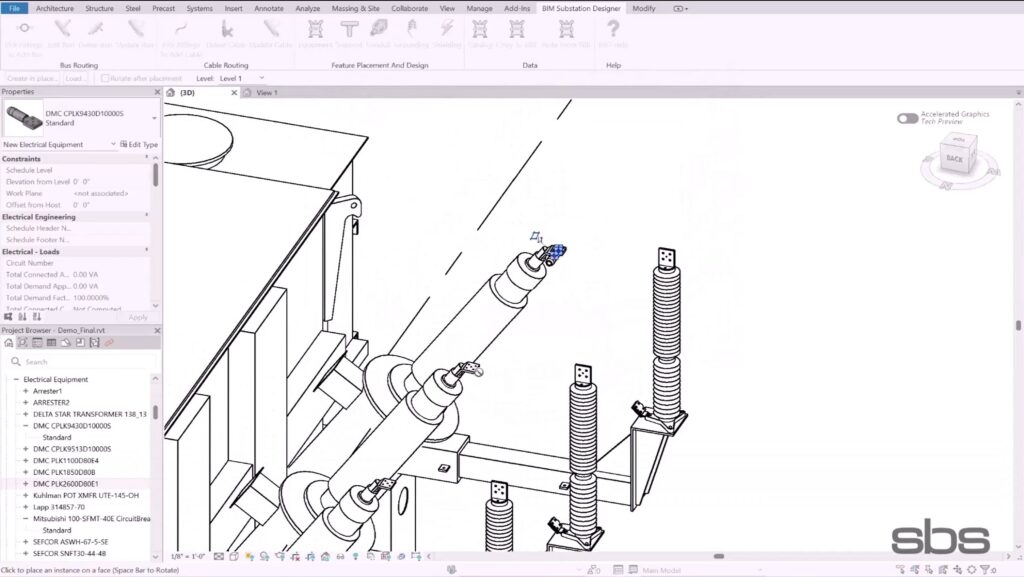
“Engineers were already trying to use Revit for substation work, but without substation-specific tools, they were making substitutions that looked okay on screen but broke the underlying data,” Contino explained. “The metadata was wrong, and you’d lose functionality you didn’t even know you were losing.”
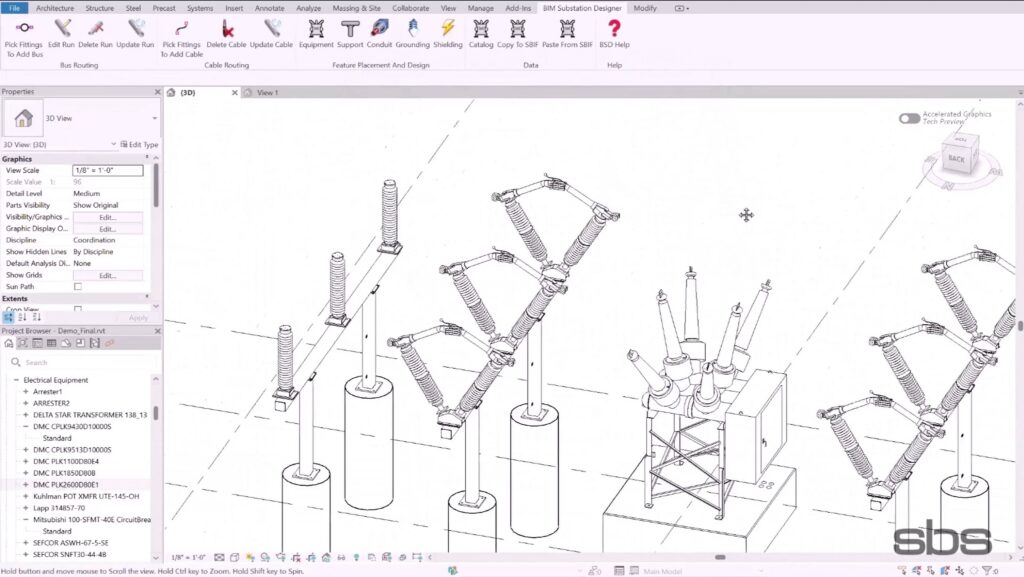
The answer wasn’t to steer those engineers away from Revit. Instead, the right approach was to build tools that make Revit work the way substation design actually requires. That meant native Revit families for substation components, automated workflows built for substation-specific engineering tasks, and a unified model designed to bring physical and P&C design together in a single environment.
Solving the Integration Problem
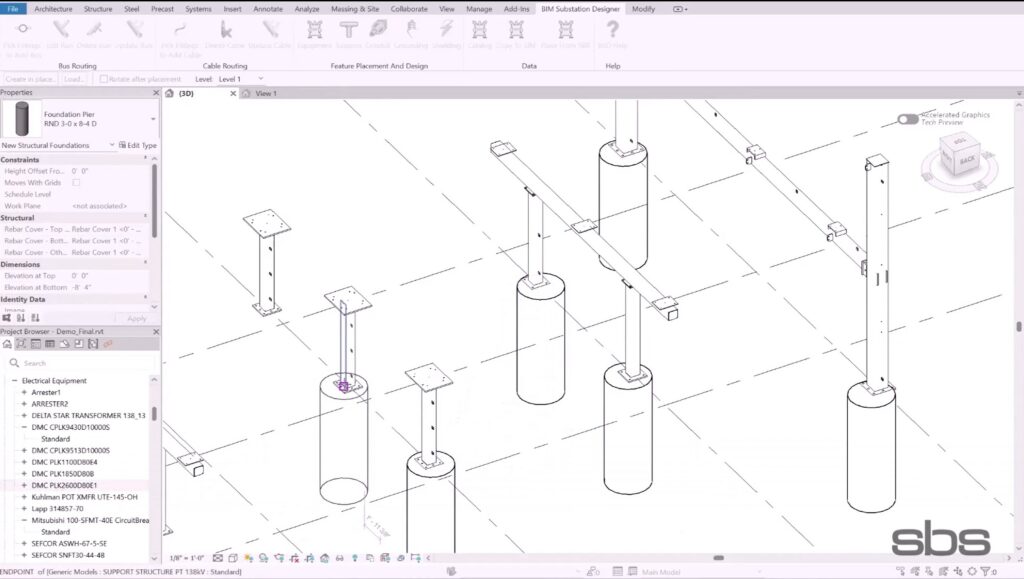
One of the most immediate benefits BSD delivers is physical design in a single, intelligent model. This eliminates disconnected workflows and manual reconciliation, which have slowed substation projects for years. Traditional substation design follows a phased 30/60/90 process (general arrangement and foundations, then physical wiring, then protection and controls) because separate tools require sequential handoffs. BSD already collapses much of that sequence for physical design, enabling phases to overlap, shortening review cycles, and propagating changes automatically. Later this year, BSD will extend that same integrated environment to include P&C design, bringing the complete substation workflow into a single model for the first time.
“You’re not just blurring the line between 30/60/90 deliverables,” Contino said. “You’re speeding up design and reducing cost. By automatically applying drafting standards, the tool helps ensure designs are aligned with documentation requirements earlier, streamlining the handoff between engineering and drafting.”
Beta customer data bears this out: a standard substation design task that takes approximately an hour in a vanilla Revit environment was completed in 18 minutes using BIM Substation Designer. That’s a meaningful productivity gain on its own, and, as the next entry in this series will explore, it’s only the beginning of what BSD is designed to enable.
The Right Next Step
BIM Substation Designer is not a replacement for what SBS has built. It is the next layer of it, purpose-built for the segment of the market that is ready for BIM-native substation design, and designed with the same depth of utility industry knowledge that has made SDS the production standard for North American substation work. “We have a proven portfolio that a lot of utilities rely on every day,” Whyte said. “BSD is how we make sure that portfolio is ready for where the industry is heading, not just where it’s been.”
Next in the Series
In Part 2, “More Than a Design Tool: The Data Problem No One Was Solving,” Whyte and Contino dive into how BSD is built on an open data standard based on IFC and CIM, and why connecting siloed substation data changes everything downstream.