
SBS 2027 Solutions: New Tools, New Workflows, and New Opportunities for Infrastructure Design Teams
Infrastructure projects are becoming more complex.
A utility project that once involved a handful of engineering disciplines may now require coordination between distribution designers, substation engineers, protection and control specialists, broadband planners, civil engineers, BIM teams, and construction partners. Each group brings its own requirements, standards, and preferred tools, yet all are contributing to the same project.
The challenge is no longer simply producing designs. It’s coordinating information across increasingly complex workflows while maintaining quality, consistency, and schedule.
At SBS, we’ve spent decades working alongside utilities, engineering firms, and infrastructure owners. Many of the people building our software have worked in the industries we serve. They’ve experienced the frustrations of disconnected workflows, repetitive design tasks, and the constant pressure to deliver more projects with the same resources.
That’s why we build purpose-built engineering software that automates repetitive tasks, connects critical project data, and helps teams deliver better projects without sacrificing engineering quality.
That philosophy is reflected throughout the SBS 2027 product releases.
This year’s release expands SBS solutions across utility, broadband, and substation engineering, introducing new design environments, new workflow capabilities, and new opportunities for organizations looking to automate and connect more of the infrastructure design lifecycle.
“Infrastructure projects today involve more stakeholders, more data, and more specialized disciplines than ever before. The challenge isn’t simply producing designs. It’s coordinating work across teams while maintaining quality, consistency, and speed. That’s where we believe technology can have the greatest impact.” – Al Eliasen, CEO, SBS
Bringing Substation Design to Revit
The most significant addition to the SBS portfolio in 2027 is BIM Substation Designer for Revit.
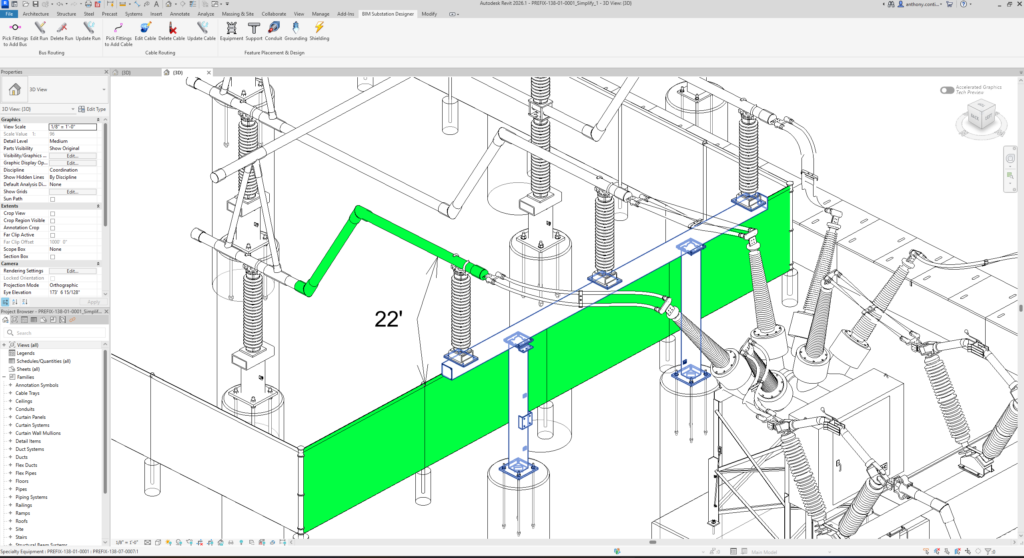
For years, utilities and engineering firms have asked for a way to combine the benefits of BIM workflows with the specialized engineering capabilities required for substation design. As BIM adoption has expanded across the utility industry, that need has only become more pronounced.
BSD is built specifically for substation engineering workflows, the initial release includes intelligent equipment libraries, automated ground grid creation, flexible cable and rigid bus design tools, conductor routing capabilities, and project templates that help engineers develop physical substation models more efficiently.
More importantly, it brings decades of substation engineering expertise into Revit.
For organizations that have standardized on BIM workflows, or for projects where BIM deliverables are becoming a requirement rather than an option, BIM Substation Designer creates entirely new opportunities to integrate specialized substation engineering into existing project environments.
“Revit isn’t just another platform we wanted to support. Many utilities, EPCs, and engineering firms have made BIM a core part of how they deliver projects. BIM Substation Designer brings specialized substation engineering workflows into that environment, allowing customers to combine utility-specific design capabilities with the broader coordination benefits of BIM.” – Kevin Whyte, VP, Substation
Expanding Engineering Workflows with Civil 3D
Another major milestone in the SBS 2027 release is support for Autodesk Civil 3D across both Automated Utility Design (AUD) and Automated Broadband Designer (ABD).
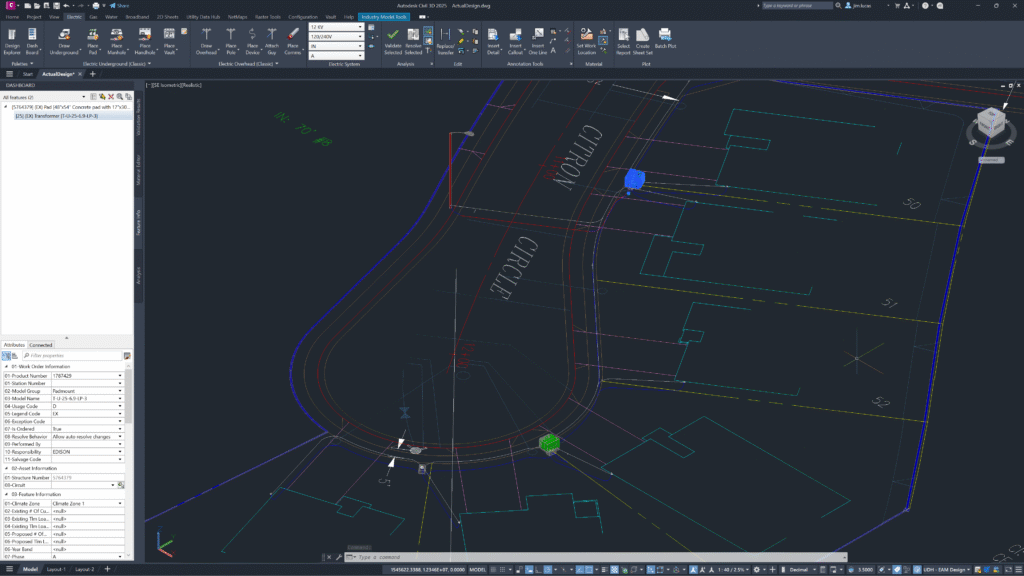
Civil 3D has become a central platform for infrastructure design, particularly on projects where utility, telecommunications, and civil engineering disciplines must work together. By bringing SBS automation and engineering workflows directly into Civil 3D, organizations can now access the capabilities of AUD and ABD within an environment many teams already use every day.
For engineering firms, this expansion is particularly significant. Many firms are responsible for delivering utility, broadband, civil, and site design work within the same project. Civil 3D support allows those teams to leverage SBS’s specialized engineering workflows while remaining within a platform that is already deeply embedded in their project delivery processes.
This expansion is about flexibility. Engineering organizations should be able to choose the design environments that best fit their business while still benefiting from the specialized workflows that make utility and broadband projects successful.
“Our goal isn’t to force customers into a particular platform. It’s to deliver specialized engineering workflows in the environments that make the most sense for their business. Expanding AUD and ABD into Civil 3D gives customers more flexibility while preserving the automation and engineering workflows that make these solutions valuable.” Al Eliasen, CEO, SBS
Accelerating Utility Infrastructure Design
Utilities are being asked to modernize aging infrastructure, accommodate load growth, support electrification initiatives, and improve reliability, all while facing continued workforce challenges.
AUD helps utilities and engineering firms meet those demands by automating repetitive engineering tasks, enforcing design standards, and streamlining the creation of construction-ready deliverables.

From distribution design and staking workflows to construction documentation and bill of material generation, AUD is built around a simple goal: helping engineering teams spend more time engineering and less time drafting, documenting, and manually checking work.
The 2027 release continues SBS’s investment in those workflows, helping utilities deliver more projects without increasing engineering complexity.
Advancing Broadband Network Engineering
Broadband deployment has become one of the most significant infrastructure investments underway today.
Whether supporting FTTH expansion, middle-mile construction, utility broadband initiatives, or rural broadband programs, engineering teams are under pressure to move quickly while maintaining consistency across increasingly large and complex networks.
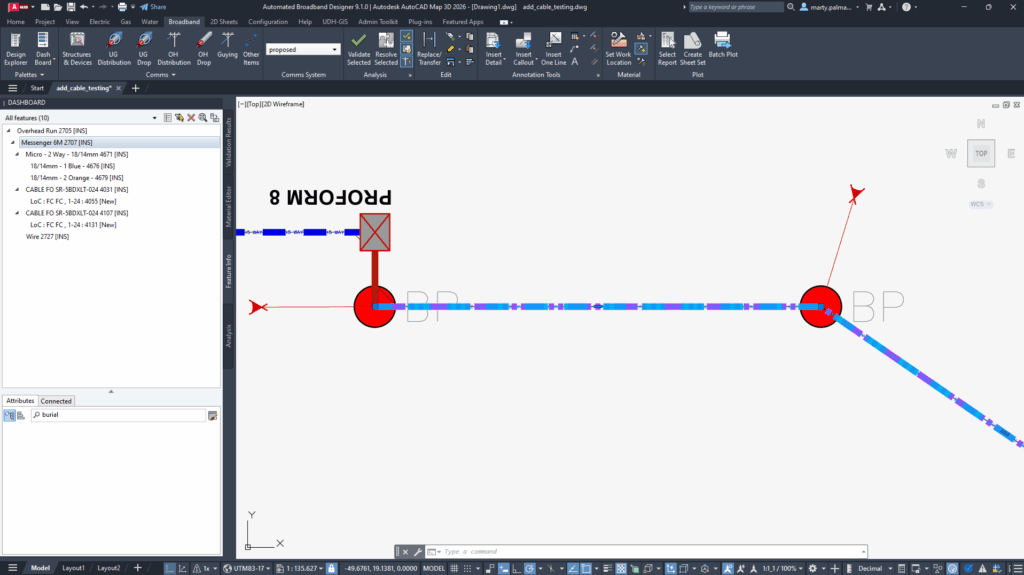
ABD applies the same automation-first philosophy to broadband engineering, helping organizations streamline network design, permitting, construction documentation, and bill of material generation.
The 2027 release introduces new Fiber Line of Count management capabilities, giving engineers enhanced visibility into network topology and infrastructure assignments. As fiber networks continue to scale, these capabilities help teams better understand, manage, and document the relationships that exist throughout the network.
Together, these enhancements continue to expand ABD as a comprehensive platform for broadband network engineering.
Supporting the Complete Substation Design Lifecycle
The SBS 2027 release also strengthens the tools that substation engineering teams rely on every day.
With the addition of BIM Substation Designer, SBS now supports substation engineering workflows from BIM coordination and physical design through detailed equipment modeling and protection and control engineering. Combined with SDS Physical and SDS Protection & Control, utilities, consultants, and EPC firms can build workflows around the environments that best fit their organizations while maintaining access to specialized tools developed specifically for substations.
This gives engineering teams the flexibility to work across Revit, AutoCAD, Inventor, and AutoCAD Electrical while maintaining consistency throughout the design lifecycle.
The latest releases continue to improve physical design, detailed equipment modeling, project-wide automation, reporting, auditing, and protection and control workflows, helping teams maintain quality and consistency from concept through construction.
Looking Ahead
Infrastructure investment is accelerating across utility, broadband, and energy markets. Delivering that infrastructure requires tools that improve speed, coordination, and consistency.
The SBS 2027 release advances that goal by connecting more of the design lifecycle, expanding where engineering teams can work, and strengthening the automation that drives project delivery.
“The future of infrastructure design isn’t a single application or discipline. It is a connected ecosystem that spans utility, broadband, and substation engineering. Our role is to help customers connect that ecosystem while giving engineers the freedom to work in the tools they know best.”
— Al Eliasen, CEO, SBS
We are looking forward to what our customers build next.